
Deploying Artificial Intelligence applications to production without observability tooling is flying blind. If you do not monitor per-call latency, token spend, and model hallucination rates in real time, your business risks unexpected API bills and poor user experiences.
LLM Observability provides complete visibility across prompt execution chains, enabling engineers to continuously audit, debug, and optimize production AI systems.
Core LLM Monitoring Metrics
- Time to First Token (TTFT): Perceived initial latency before streaming response output begins.
- Per-User Token Spend: Real-time cost tracking per route to catch anomalous usage spikes or API abuse.
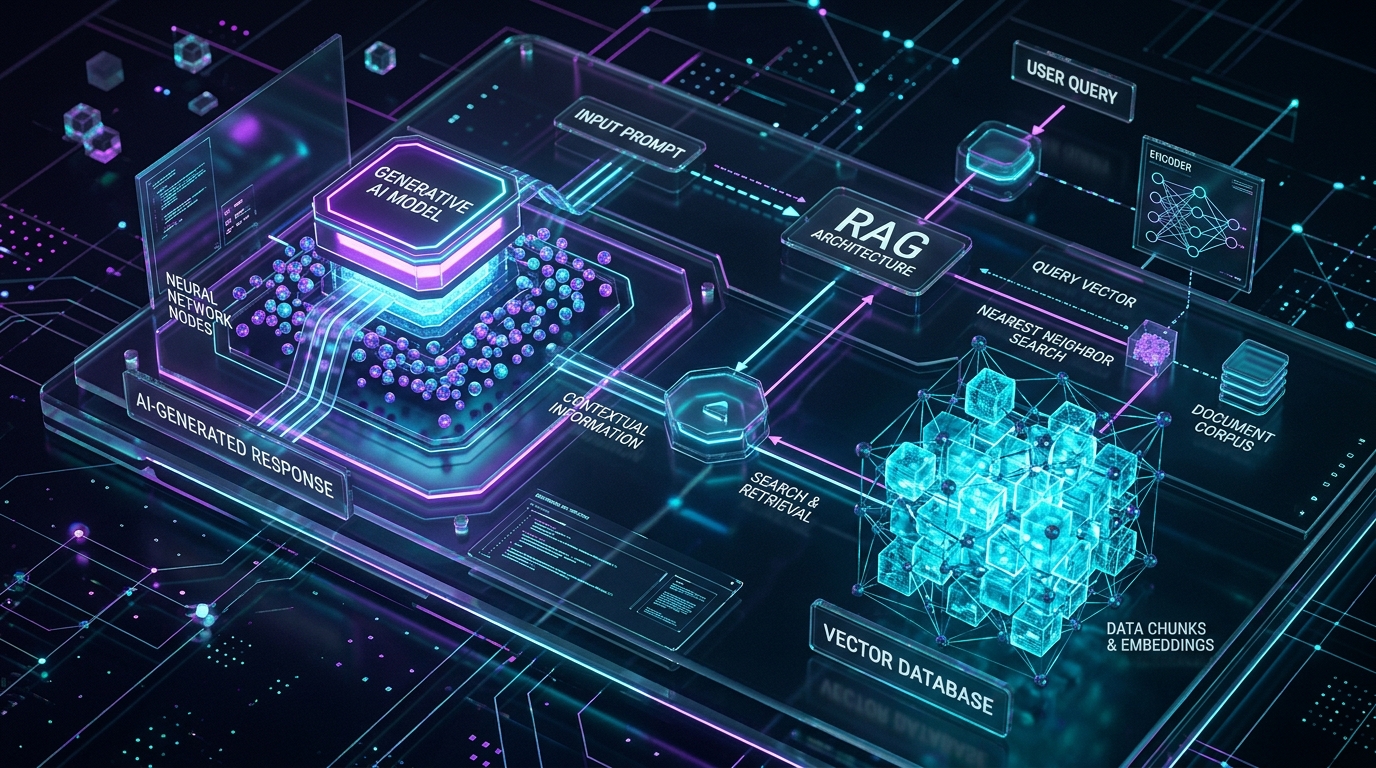
- RAG Faithfulness and Relevance Metrics: Automated evaluations scoring whether AI answers are strictly grounded in retrieved reference context.
- Chain Traceability: Step-by-step inspection of intermediate vector DB retrieval and tool calling execution.
"Deploying LLM observability with LangSmith and in modern engineering teams reduced our AI agent debugging cycles from days down to minutes." — LLM Observability Group.
Automated LLM Hallucination Detection
We deploy evaluation frameworks like Ragas and TruLens to score generated LLM responses against retrieved reference context chunks, outputting real-time faithfulness scores.
Semantic Caching for Token Cost Reduction
Deploying Redis Vector Search as a semantic caching proxy in front of LLM APIs returns cached answers for identical or near-duplicate queries, slashing operational API spend by up to 70%.
Automated AI Answer Quality Evaluation
We set up automated evaluation pipelines in LangSmith measuring relevance, coherence, and faithfulness scores for generated AI responses before and after prompt updates.
API Fallback Strategies for AI Uptime
If primary OpenAI APIs encounter latency spikes or 500 server errors, the application router switches automatically to secondary Anthropic or local AWS LLM endpoints.
Implementation Methodology and Enterprise ROI
Deploying these advanced technical architectures across enterprises in LATAM and the United States proves that success lies in measuring direct business impact: slashing operational overhead, accelerating Time-to-Market delivery, and raising end-user satisfaction. in modern engineering teams, we guide your engineering teams through every phase, ensuring clean code, thorough documentation, and knowledge transfer.
Summary and Key Technical Takeaways
- Baseline Technical Audit: Evaluate current infrastructure readiness before initiating major architecture migrations.
- Proof-of-Concept Pilot Testing: Validate changes in isolated Staging environments prior to production release.
- Continuous Observability: Deploy real-time APM monitoring to guarantee service level agreements (SLAs) remain strictly above 99.9%.
Key Technical Architecture Takeaways
Building high-availability B2B software in 2026 requires unifying modern cloud infrastructure, strict cybersecurity guardrails, and AI automation. in modern engineering teams, our engineering team partners with enterprise leaders across LATAM and North America to architect scalable web apps, custom Moodle learning portals, and native AWS cloud systems.
- End-to-End Encryption: Forced TLS 1.3 in transit and KMS encryption at rest.
- Sub-Second Response Times: Edge caching and DB index optimization for peak performance.
- AI Integration: Production-grade RAG and MCP connectors with zero data leaks.
Our engineering team delivers tailor-made software architecture, proactive cybersecurity defense, and data-driven growth marketing to scale corporate platforms reliably across global markets.