
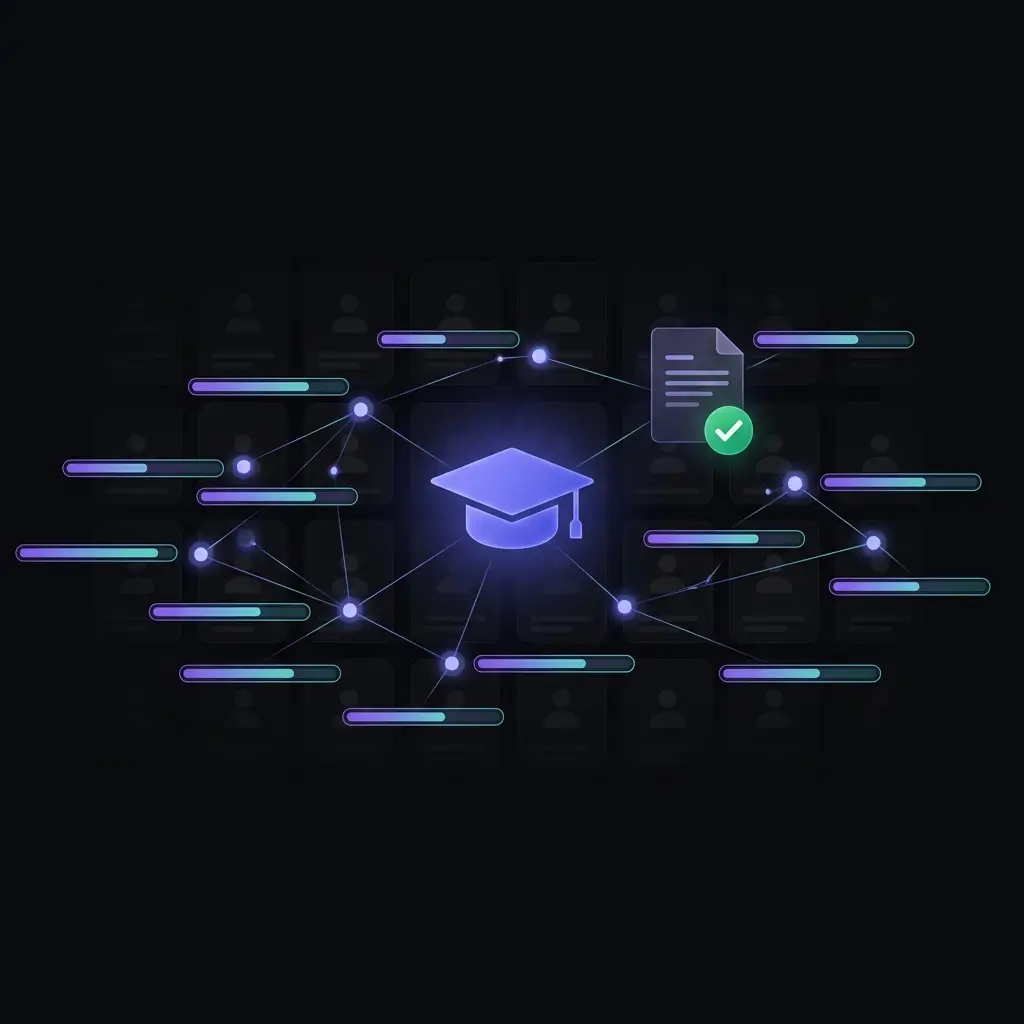
The SCORM standard dominated e-learning for decades, but carries clear constraints: it only measures browser window activity (time on slide and quiz score). In 2026, modern enterprises demand tracking real-world workplace learning via xAPI (Experience API / Tin Can API).
By integrating xAPI and a Learning Record Store (LRS) with Moodle 4.x, HR managers track learning events across mobile apps, 3D simulators, and daily software tools.
SCORM vs. xAPI: Which Standard Fits Your Business?
- SCORM 1.2 / 2004: Perfect for traditional slide courses created in Articulate Storyline or Adobe Captivate running inside the LMS.
- xAPI (Experience API): Emits structured statements ("Actor - Verb - Object", e.g., "Juan completed safety simulation on Mobile App") from any device or external system.
"Configuring xAPI with Moodle via in modern engineering teams enabled us to measure technical training effectiveness directly on the manufacturing floor in real time." — xAPI Moodle Report.
Setting Up a Learning Record Store (LRS) with Moodle
We connect Moodle 4.x with open-source LRS stores like Learning Locker or Ralph. Every learner interaction emits standardized xAPI statements stored centrally for cross-platform reporting.
Tracking Practical Learning in Simulation Environments
Using xAPI, enterprises track employee performance inside 3D machinery simulators or Virtual Reality (VR) environments, logging accuracy metrics and completion times.
Privacy and Security for xAPI Learning Data
Storing detailed workplace learning statements inside a Learning Record Store (LRS) requires applying student data anonymization and at-rest encryption to comply with strict data privacy laws.
Real-Time Learning Analytics Dashboards
Connecting LRS stores with visualization platforms like PowerBI delivers real-time dashboards showing course progress velocity and training ROI for business executives.
Implementation Methodology and Enterprise ROI
Deploying these advanced technical architectures across enterprises in LATAM and the United States proves that success lies in measuring direct business impact: slashing operational overhead, accelerating Time-to-Market delivery, and raising end-user satisfaction. in modern engineering teams, we guide your engineering teams through every phase, ensuring clean code, thorough documentation, and knowledge transfer.
Summary and Key Technical Takeaways
- Baseline Technical Audit: Evaluate current infrastructure readiness before initiating major architecture migrations.
- Proof-of-Concept Pilot Testing: Validate changes in isolated Staging environments prior to production release.
- Continuous Observability: Deploy real-time APM monitoring to guarantee service level agreements (SLAs) remain strictly above 99.9%.
Key Technical Architecture Takeaways
Building high-availability B2B software in 2026 requires unifying modern cloud infrastructure, strict cybersecurity guardrails, and AI automation. in modern engineering teams, our engineering team partners with enterprise leaders across LATAM and North America to architect scalable web apps, custom Moodle learning portals, and native AWS cloud systems.
- End-to-End Encryption: Forced TLS 1.3 in transit and KMS encryption at rest.
- Sub-Second Response Times: Edge caching and DB index optimization for peak performance.
- AI Integration: Production-grade RAG and MCP connectors with zero data leaks.
Our engineering team delivers tailor-made software architecture, proactive cybersecurity defense, and data-driven growth marketing to scale corporate platforms reliably across global markets.